Most SAT prep gives a student a stack of practice tests and a score at the end. The score says how much they missed, but not which kind of question keeps costing them points, and the next test is just as likely to be spent on things they already know. iLearnRight is built the other way round: it keeps track of every question pattern a student has seen, and spends the next session on the ones that are still shaky.
This post is a tour of what's in the product today, for students, parents and tutors.
The SAT tutor: practice that remembers
The core of iLearnRight is an adaptive tutor for the Digital SAT. Questions follow the real format: multiple choice and student-produced (grid-in) answers, an answer eliminator, a built-in Desmos calculator and reference sheet on Math, and keyboard shortcuts (A–D to pick, Enter to check). Every question is tagged with its official skill (for example Linear Equations in One Variable) and a finer sub-pattern (for example variables on both sides or value of an expression).
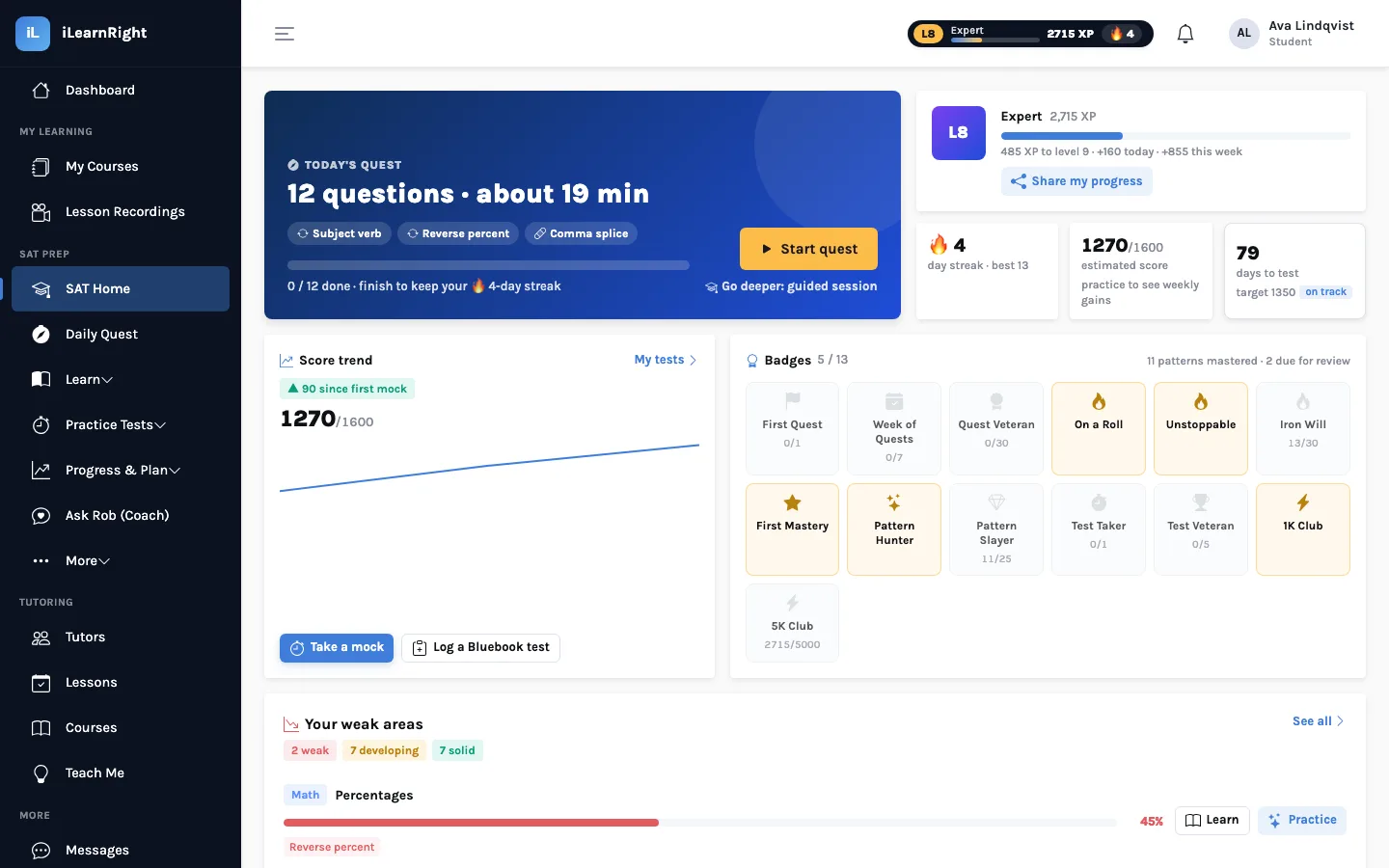
When a student answers, iLearnRight updates two things: the mastery of that skill and the mastery of that exact sub-pattern. Those numbers decide what comes next. The daily quest pulls in patterns that are due for review or still weak, the Weak Areas page lists every pattern under 50%, and the weekly plan schedules short lessons on this week's weakest topics. We explain the mechanics in how adaptive practice works.
What a student sees
- Diagnostic. A 16-question quick check on the most-tested skills, or a full untimed diagnostic by subject. It gives the daily quest real data to start from.
- Daily Quest. About 12 questions, roughly 20 minutes, on three patterns. Finishing it keeps the streak going. Every wrong answer shows the correct one and a worked explanation, and tells the student when that pattern will come back.
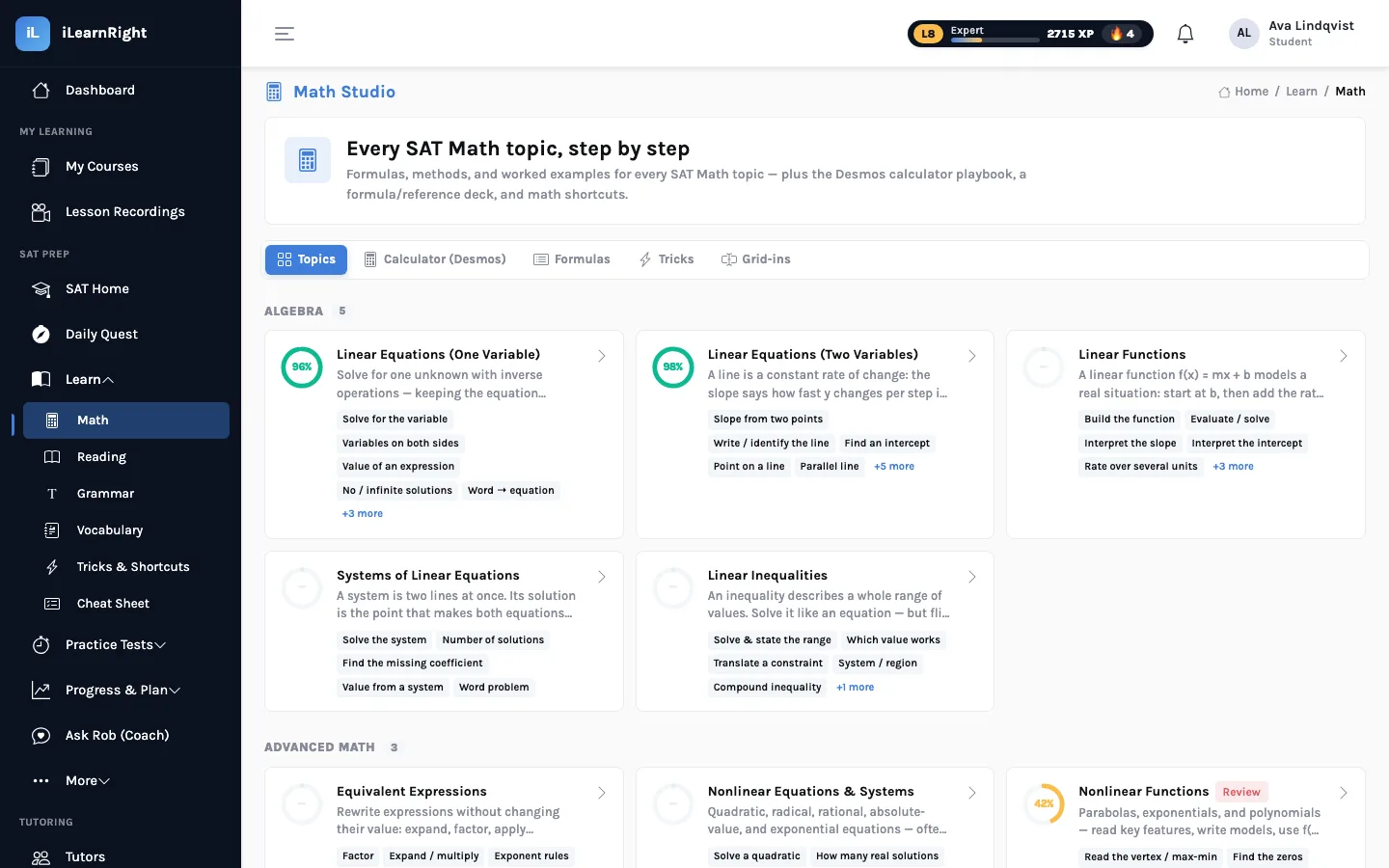
- Studios. Math, Reading, Grammar and Vocabulary studios teach each topic step by step, with worked examples, diagrams, a formulas deck and a Desmos playbook. There's also a cheat sheet for exam-day review and a Tricks & Shortcuts page on elimination and pacing.
- Mock tests. A 30-question quick mock or a full-length, module-adaptive Digital SAT with the real timing and a 10-minute break. Results come back as an estimated score range with a per-question review.
- Progress. A score trend from mock tests, accuracy by topic, badges, and a Weak Areas page that shows every pattern as weak, developing or solid.
Human tutors, for the SAT or any subject
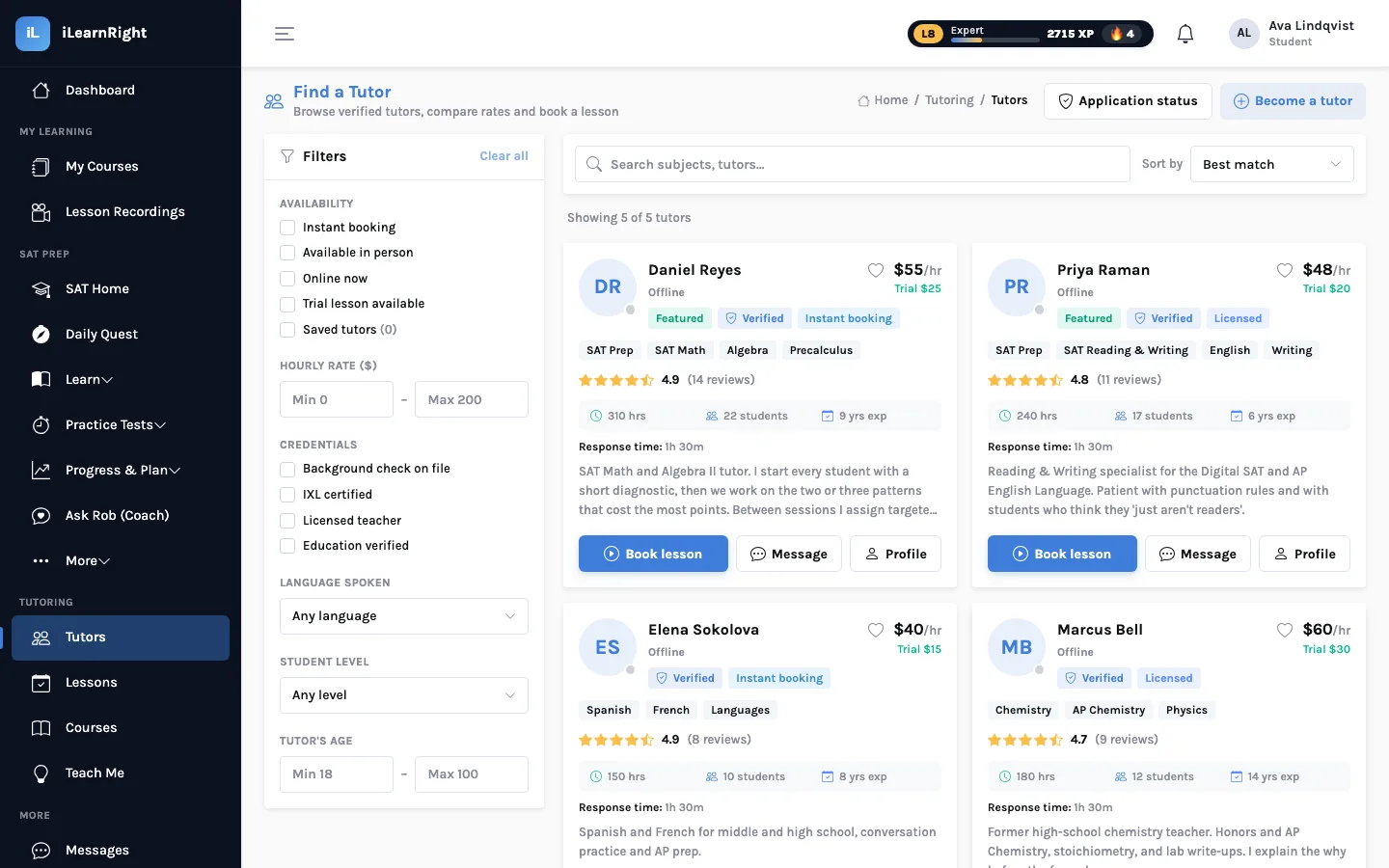
Some things are better with a person. iLearnRight includes a tutor marketplace: tutor profiles with subjects, rates, languages, student levels and credentials (background check, licensed teacher, education verified), filters for each, and real-time availability. A student picks a slot from the tutor's calendar and books; nothing is charged at booking, and the student pays the tutor directly after the lesson. Lessons run in a built-in online classroom with video, a shared whiteboard, a code pad and chat.
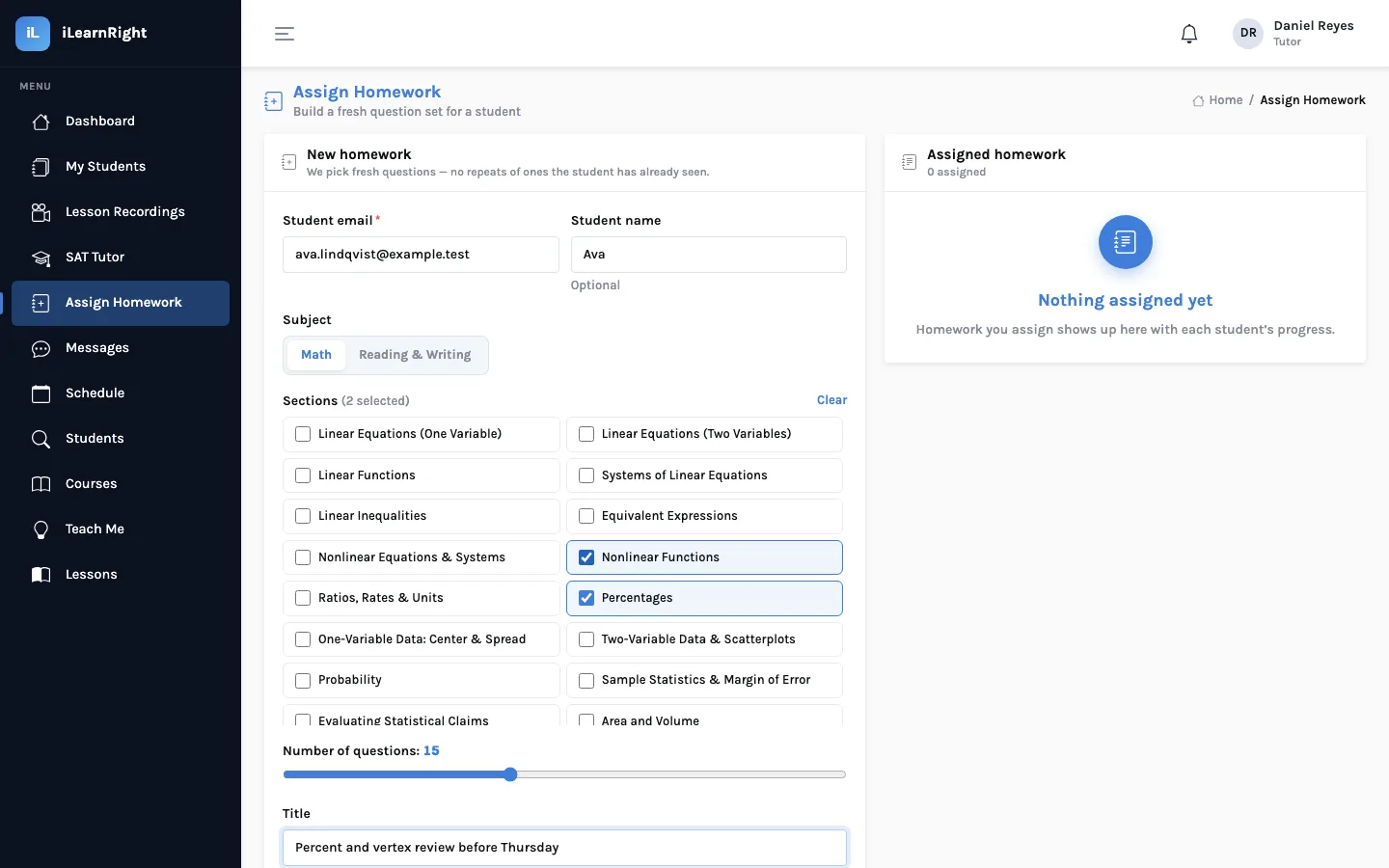
Tutors get their own side: a dashboard, availability, a schedule, a list of their students, and an Assign Homework tool that builds a fresh SAT question set for one student from the topics the tutor picks. See how a tutor uses homework between sessions.
Courses and Teach Me
Beyond the SAT, students can follow school courses in My Courses (self-study plus tutor lessons on one page per course), browse the course catalog, and use Teach Me to generate a course on a topic they describe, with lessons, narration and quizzes. Teach Me and the coach (Ask Rob) use AI models; the SAT practice, studios, mock tests and progress pages work from the question bank and lesson content.
About scores. Mock-test results in iLearnRight are estimates based on a practice test, shown as a range. They are not official College Board scores, and no practice tool can promise a particular result on test day.
Ava's first three weeks
Ava, a junior, set a target of 1350 with her test date 79 days away. Her quick check showed Algebra was in decent shape but percentages and punctuation were not. Three weeks of daily quests later, her Weak Areas page shows exactly two weak patterns left: reverse percent and comma splices. She booked a one-hour lesson with a Math tutor and listed those two in the booking notes, so the session starts where the app left off.
Who it's for
Students get practice that meets them where they are and doesn't waste time on what they already know. Parents get a daily recap email when their student finishes the day's plan (what parents can see). Tutors get a way to keep students practising the right things between sessions. Start with the 12-week study plan if you have a test date in mind.